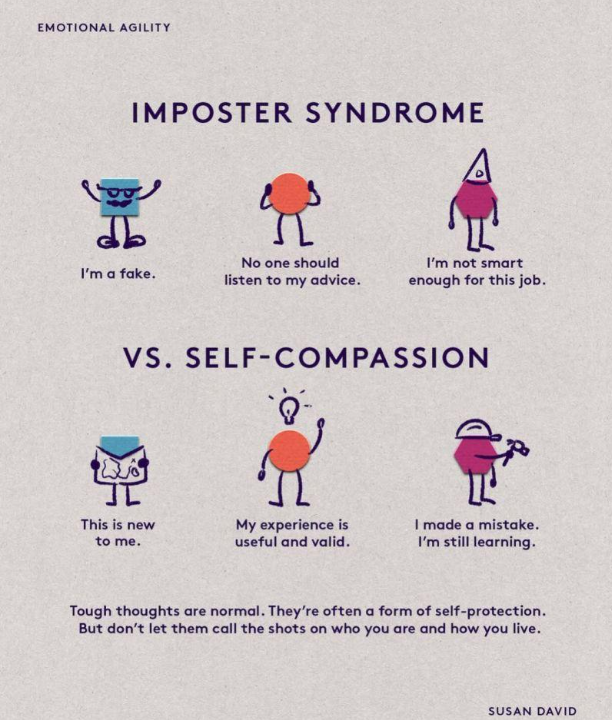
The Imposter Syndrome Experience in the Workplace
Ever feel like a fraud, even when you're achieving great things? That's imposter syndrome talking – an experience where we doubt our accomplishments and fear being exposed as a "fake." It can be incredibly debilitating, leading to burnout, anxiety, and holding ourselves back.
But what if the antidote isn't to work harder or prove ourselves more, but to embrace self-compassion?
Imposter syndrome often thrives on self-criticism, perfectionism, and the belief that our worth is solely tied to our output. Self-compassion, on the other hand, involves treating ourselves with the same kindness and understanding we'd offer colleagues. It acknowledges that mistakes are part of being human and that our worth isn't contingent on flawless performance.
Below are helpful reframes to bridge the gap between imposter syndrome and self-compassion at work:
Acknowledge and Normalise:
❌ Imposter Syndrome Refrain: "Everyone else knows what they're doing. I'm the only one struggling."
✅Self-Compassion Reframe: "Many intelligent and capable people experience imposter syndrome. It's a sign I care about my work and want to do well, not that I'm inadequate."
🌻Strategy: Talk about it. Sharing your feelings with trusted colleagues or mentors can reveal that you're not alone.
Focus on Effort, Not Just Outcome:
❌ Imposter Syndrome Refrain: "I only succeeded because of luck/someone else's help. I didn't actually do it."
✅Self-Compassion Reframe: "I put in the effort, learned, and contributed. Even if there were contributing factors, my role and dedication were vital."
🌻 Strategy: Keep a "success journal" or list of your accomplishments, big and small. Note the effort and skills you applied.
Challenge Your Inner Critic:
❌Imposter Syndrome Refrain: "That wasn't good enough. I should have done X, Y, or Z better."
✅ Self-Compassion Reframe: "I did my best with the resources and knowledge I had at the time. I can learn from this and grow."
🌻Strategy: When self-critical thoughts arise, respond to them as you would a friend who was being hard on themselves. What advice would you give them?
Embrace Imperfection & Learning:
❌ Imposter Syndrome Refrain: "I have to be perfect to be seen as competent."
✅Self-Compassion Reframe: "It's okay to not know everything. Every challenge is an opportunity to learn and develop."
🌻Strategy: View setbacks as points for growth, rather than evidence of failure. Ask for feedback with a curious, growth-oriented mindset.
Shifting from Imposter Syndrome to self-compassion is a journey. What self-compassion reframes have you found helpful? Please comment below.
NOTE: This brilliant visual was created by Susan David and shared via Instagram.