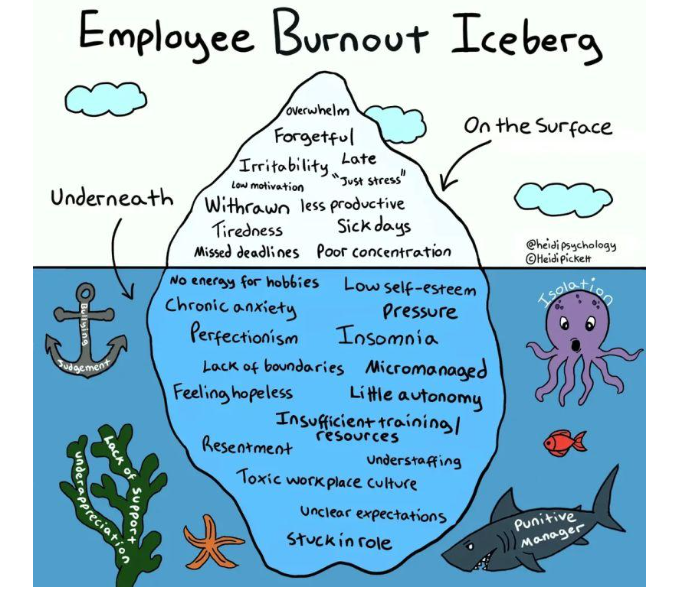
The Employee Burnout Iceberg
As the year draws to a close, the cumulative cognitive load from work, social demands, and holiday logistics can push anyone to their limits. For our neurodivergent peers, this period can be particularly taxing due to the increased demands on executive function, sensory regulation, and masking. The concept of the Burnout Iceberg is vital here: the visible struggles are often just a small fraction of the deeper, compounding exhaustion.
What we might see above the water, reduced clarity, increased stimming or withdrawal, or communication differences, are often stress responses. Beneath the surface are the true sources: sensory overwhelm from office noise or holiday decor, social exhaustion from constant meetings, task paralysis due to ambiguous deadlines, and the immense energy cost of continuous masking.
🤝 Neuroaffirming Ally Strategies
To be a truly supportive ally, focus on reducing friction and validating their unique needs:
✅Validate the Need for Regulation: Instead of viewing sudden quietness or increased movement (stimming) as a problem, recognise them as legitimate self-regulation strategies. Offer unconditional flexibility. Ask: "What environment or tool do you need right now to recharge?"
✅ Offer Specific, Low-Demand Support: Vague offers of help ("Let me know if you need anything") increase the burden of executive function (the need to figure out what to ask for). Instead, offer ultra-specific, non-verbal support: "I can turn down the office lights," or "Would you prefer this conversation via email instead of video?"
✅ Reduce Ambiguity in Tasks: Task switching and unclear priorities deplete cognitive energy. Help a peer by offering to create a hyper-specific checklist for them, or by clarifying the absolute top priority item: "If you only do one thing today, it should be X."
✅ Respect and Model Boundaries: Advocate for quiet working time and encourage deep-work blocks without interruption. Normalise that not all communication needs to be synchronous.
✅ Burnout is not a personal failure; it is a sign that demands have exceeded capacity. By being neuroaffirming allies, we validate the inherent differences in energy processing and help create environments where everyone can thrive, not just survive, through the end-of-year pressure.
What neuroaffirming practices are helping your team navigate the end-of-year rush?
This visual was created by Hedi Pickett and shared via their Instagram account @heidipsychology