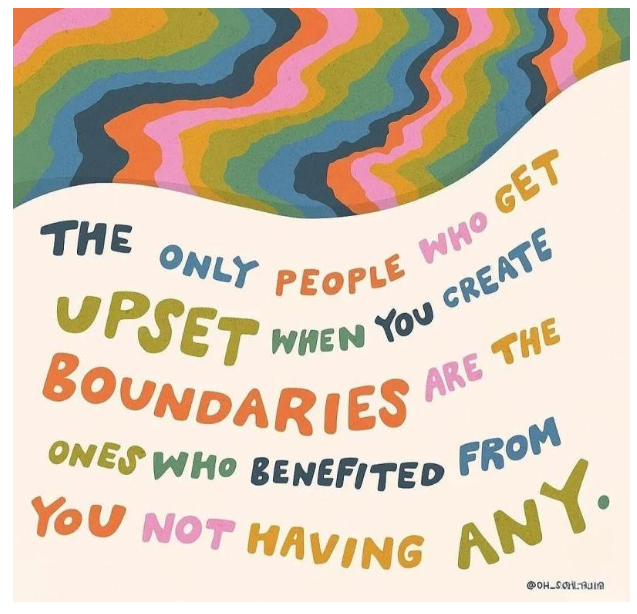
Setting and Maintaining Boundaries for Neurodivergent Employees
Setting boundaries is crucial for every professional's well-being and productivity. However, for neurodivergent employees, clear, firm boundaries are not just a preference, they are non-negotiable acts of self-care. Many neurodivergent individuals find setting and maintaining boundaries uniquely challenging due to several factors:
🔍 Masking and People-Pleasing: A deep-seated need to "fit in" and mask natural differences can lead to a tendency to overcompensate by saying "yes" to everything, fearing that setting a boundary will jeopardise their acceptance or job security.
🔍 Sensory and Cognitive Overload: Many boundaries relate directly to managing sensory input (noise, light) or cognitive load (too many meetings, open-plan offices). Explaining these needs can be exhausting, and having them dismissed leads to internalising the issue.
🔍 Difficulty Identifying Needs: Years of suppressing or minimising one's own internal experience in a neurotypical world can make it genuinely hard to identify needs until a boundary is severely crossed, resulting in exhaustion or meltdown.
Strategies to Foster Boundary-Setting
The responsibility for an inclusive environment falls on both the employee and the employer. Effective strategies include:
✅ Be Explicit, Not Implicit: Ambiguity is a major barrier. Managers must communicate expectations, deadlines, and communication methods with literal, written clarity.
✅ Focus on Sustainable Work: Employees should identify the non-negotiable factors that impact their energy (e.g., "No meetings before 10 AM," "Only check email twice a day"). Frame boundaries around what you need to do your best work.
✅ Validate Needs as Structural, Not Personal: Instead of viewing accommodations as special favours, treat them as essential enabling conditions for high performance. Employees can anchor their boundaries to job tasks, shifting the focus from personal challenges to a professional requirement. For example, instead of "I can't handle the noise," try, "To maximise my concentration on this project, I need a dedicated quiet workspace," or "To ensure I can maintain deep focus for this project, I will be turning off notifications for two hours". This helps affirm the boundary as a tool for success.
By making boundary-setting a supported, explicit part of the work culture, we don't just protect our neurodivergent colleagues, we build a more thoughtful and sustainable workplace for everyone.
What is one specific, low-stakes boundary you can practice setting this week (e.g., declining a non-essential meeting, scheduling a quiet work block) to protect your energy?
Please note that this visual was created by Caroline Pivovar (aka @ohsograceful on Instagram).