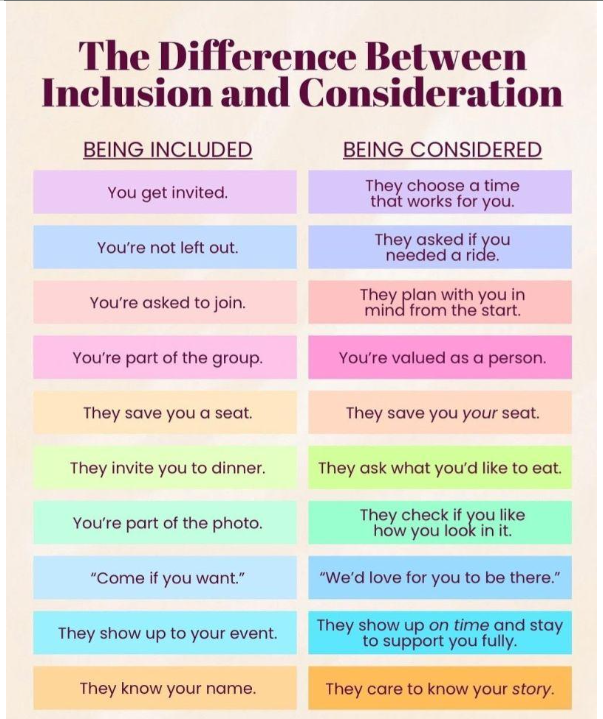
The Difference Between Inclusion and Consideration at Work
Have you ever stopped to truly consider the difference between inclusion and consideration in the workplace?
The words are often used interchangeably, yet their impact on an employee's experience can be miles apart. Understanding this distinction is vital for cultivating a truly supportive and high-performing environment.
Inclusion is fundamentally about access and presence. It's the act of ensuring diverse individuals are present and giving them a seat at the table. It says, "You can come here." This essential first step is often fulfilled through initiatives that can sometimes feel like a box-checking exercise—meeting quotas and attending mandatory training.
However, being considered provides something far deeper: belonging. This goes beyond mere presence. Consideration is the intentional act of valuing an individual's unique perspective, needs, and contributions. It says, "You belong here."
So what is the path to true belonging?
Think about the difference: When you are merely included, you have access to the conversation. When you are truly considered, your thoughts are actively sought out, listened to, and factored into the decision-making process.
Inclusion checks a box; consideration checks the heart.
A workplace can be "inclusive" on paper, yet still leave employees feeling isolated or marginalised if their unique needs and ideas aren't genuinely considered. To move from a policy of inclusion to a culture of belonging, leaders must shift their focus. It's not enough to invite diverse talent; we must foster an environment where every voice is expected, valued, and genuinely incorporated into the fabric of the organisation.
Let's commit to moving beyond just access and actively build workplaces where everyone feels profoundly considered, leading to true belonging, deeper engagement, and greater innovation.
In your experience, what’s the biggest barrier stopping workplaces from moving past checking the 'inclusion box' and into genuine consideration? I'd love to hear your thoughts below ⬇️
This brilliant visual was created by Dr Natalya and shared via her Instagram page @elnatherapy