Building Capacity Rather Than Just Ticking Boxes
In the world of corporate diversity and inclusion, we often hear a lot of "right" words. We see the polished slide decks, the LinkedIn banners, and the high-level commitments. But true progress isn't found in the grand gestures; it’s found in the small, proactive choices that signal a genuine shift in culture.
Last month, I had the pleasure of presenting a neurodiversity session for the Reserve Bank of Australia (RBS). While the engagement from the team was fantastic, it was what happened prior to the session that truly blew me away.
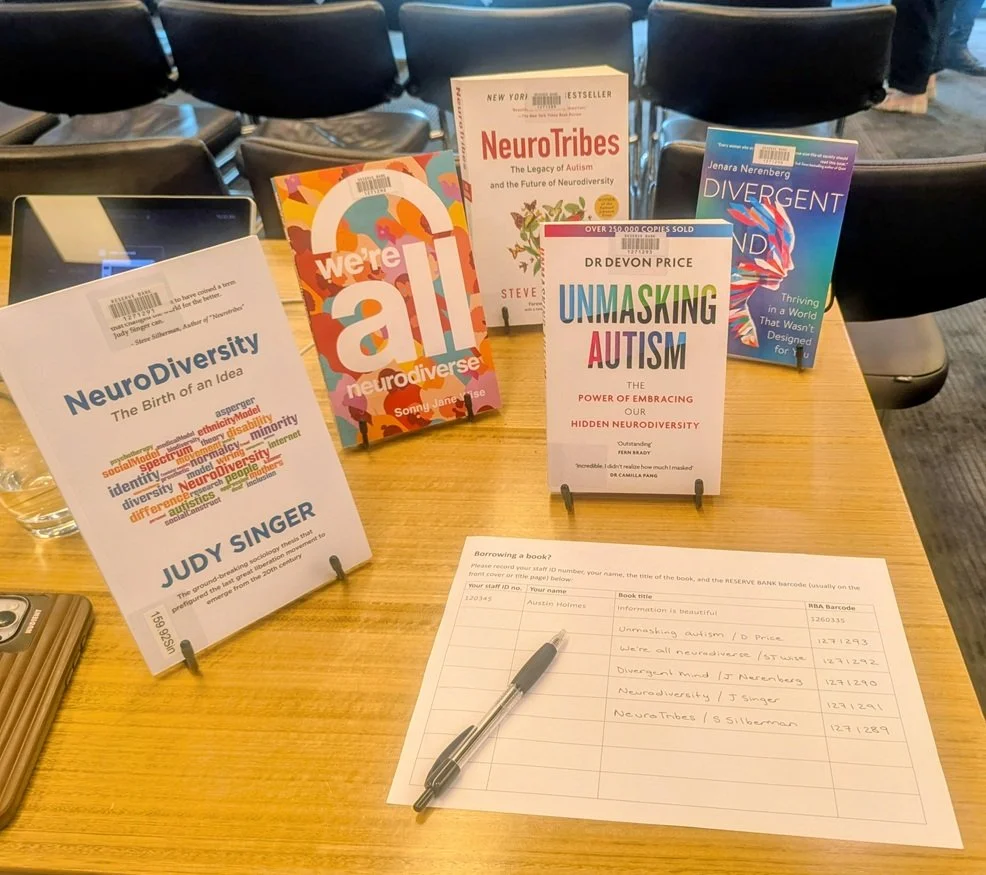
Prior to the session, I shared a few key literary resources - books designed to deepen understanding of neurodivergent lived experiences and provide practical frameworks for workplace support. Usually, people jot these titles down and, with the best of intentions, they end up buried in a "to-read" list that never sees the light of day.
The RBA took a different path.
Within days, they took the initiative to proactively purchase several copies of those recommended books for their employee library but them on display and made sure staff new they were available to access.
This might seem like a small administrative task, but in the context of neuroinclusion, it is a massive win. Here’s why:
Removing Barriers: By placing these resources in the internal library, the RBA removed the financial and logistical barriers for employees who want to learn more.
Signalling Safety: It sends a clear message to neurodivergent staff: “We value your perspective enough to invest in the education of your peers.”
Building Capacity: True inclusion isn't just about HR policies; it’s about building the collective intelligence of the entire workforce.
Neuroinclusion in action isn't just a policy change; it’s the quiet, proactive steps that build a culture of curiosity and support.
If we want to move the needle on neurodiversity, we have to look beyond the boardroom. We need to look at how we support the "quiet learning" that happens in the breakroom or at a desk.
The RBA’s actions serve as a brilliant example of building capacity rather than just ticking boxes. They didn't wait for a formal request or a budget cycle; they saw a way to better support their people and they took it.
To the team at the Reserve Bank of Australia: thank you for being a leader that doesn't just talk about inclusion, but actively weaves it into the fabric of your institution. This is exactly what "showing up" looks like.
Is your organisation ready to move from awareness to action? Sometimes, the most impactful first step is simply making sure the right stories are on the shelf.